
In today’s ingredient-conscious cosmetics market, Copper Peptide (GHK-Cu) has become a star ingredient heavily pursued by major brands due to its remarkable anti-aging and skin-repairing benefits. However, GHK-Cu is notorious for being "fragile"—it can easily lose its stability, degrade, or change color during manufacturing and storage.
So, how exactly does an exceptional cosmetic ingredient peptide factory maintain the high biological activity of GHK-Cu? The secret lies within three core manufacturing stages:
1. Precision Chelation and Process Control
The essence of GHK-Cu is a chelated complex of tripeptide-1 and a copper ion. The key to high activity lies in a "perfect marriage" between the two.
▪ The Perfect 1:1 Ratio: Leading factories utilize precise calculations and automated feeding systems to ensure that tripeptide-1 and copper ions achieve an ideal chelation state. Excess free copper ions can cause skin irritation, while too little fails to deliver the desired synergistic effect.
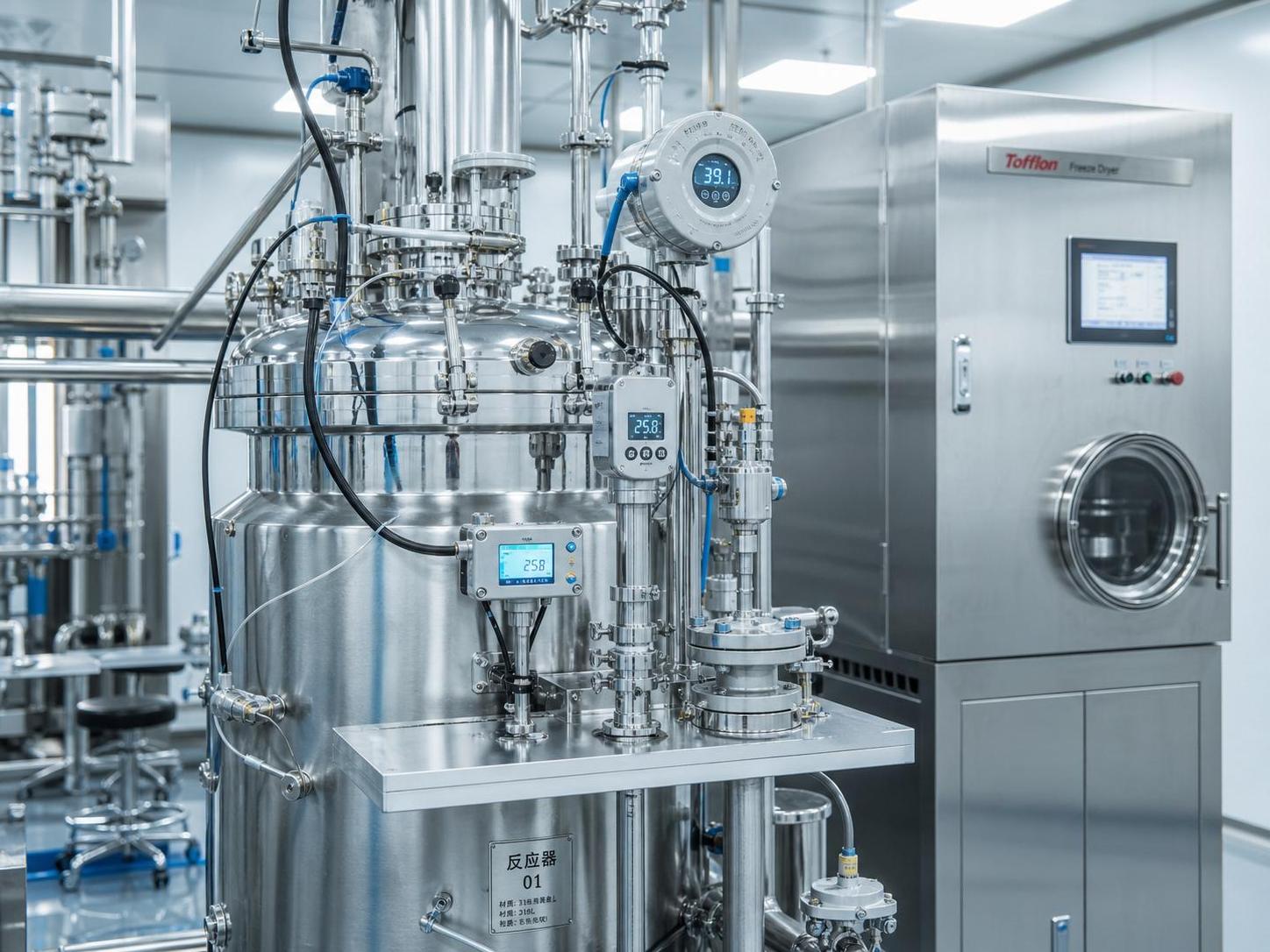
▪ Dual Monitoring of pH and Temperature: The chelation reaction is highly sensitive to its environment. Standardized factories use fully automated reactors to lock temperature and pH levels within an extremely narrow optimal range, preventing peptide chain degradation or structural variance at the source.
2. Advanced Encapsulation Technologies for Superior Stability
GHK-Cu is vulnerable to inactivation when exposed to light, heat, or fluctuating pH environments. To tackle this pain point, top-tier peptide factories often employ micro-encapsulation or liposomal delivery systems.
By encasing GHK-Cu within nano-sized protective shells, the ingredient is shielded from oxidation caused by external air and light. This not only preserves its structural integrity but also enhances skin penetration, ensuring that the raw material remains stable and highly active even after being formulated into final cosmetic products.
3. Pharmaceutical-Grade Freeze-Drying and Vacuum Packaging
The bioactivity of GHK-Cu degrades fastest in a liquid state. Consequently, premier factories widely adopt pharmaceutical-grade vacuum freeze-drying (lyophilization) technology.
Under ultra-low temperatures and high vacuum conditions, the GHK-Cu solution is dehydrated through sublimation, transforming it into a loose, porous lyophilized powder. Combined with light-shielding, vacuum-sealed, and nitrogen-flushed packaging, its molecular activity is perfectly locked and "frozen" in its prime state for ambient transportation and long-term storage.
Conclusion
Maintaining the high activity of GHK-Cu is a rigorous challenge of craftsmanship, technology, and quality control. Through precision chelation, advanced encapsulation, and freeze-drying preservation, elite raw material peptide factories break the curse of copper peptide instability—providing cosmetics brands with a safe, compliant, and highly effective powerhouse for anti-aging innovation.
Leave A Message
If you are interested in our products and want to know more details, please leave a message here, we will reply you as soon as we can.